
Tirzepatide and Diabetic Retinopathy: A Systematic Review of Effects on Incidence, Progression, and Retinal Outcomes in Adults with Type 2 Diabetes
DOI:
https://doi.org/10.4238/syvpp340Keywords:
periodontal disease, undiagnosed diabetes, glycemic controlAbstract
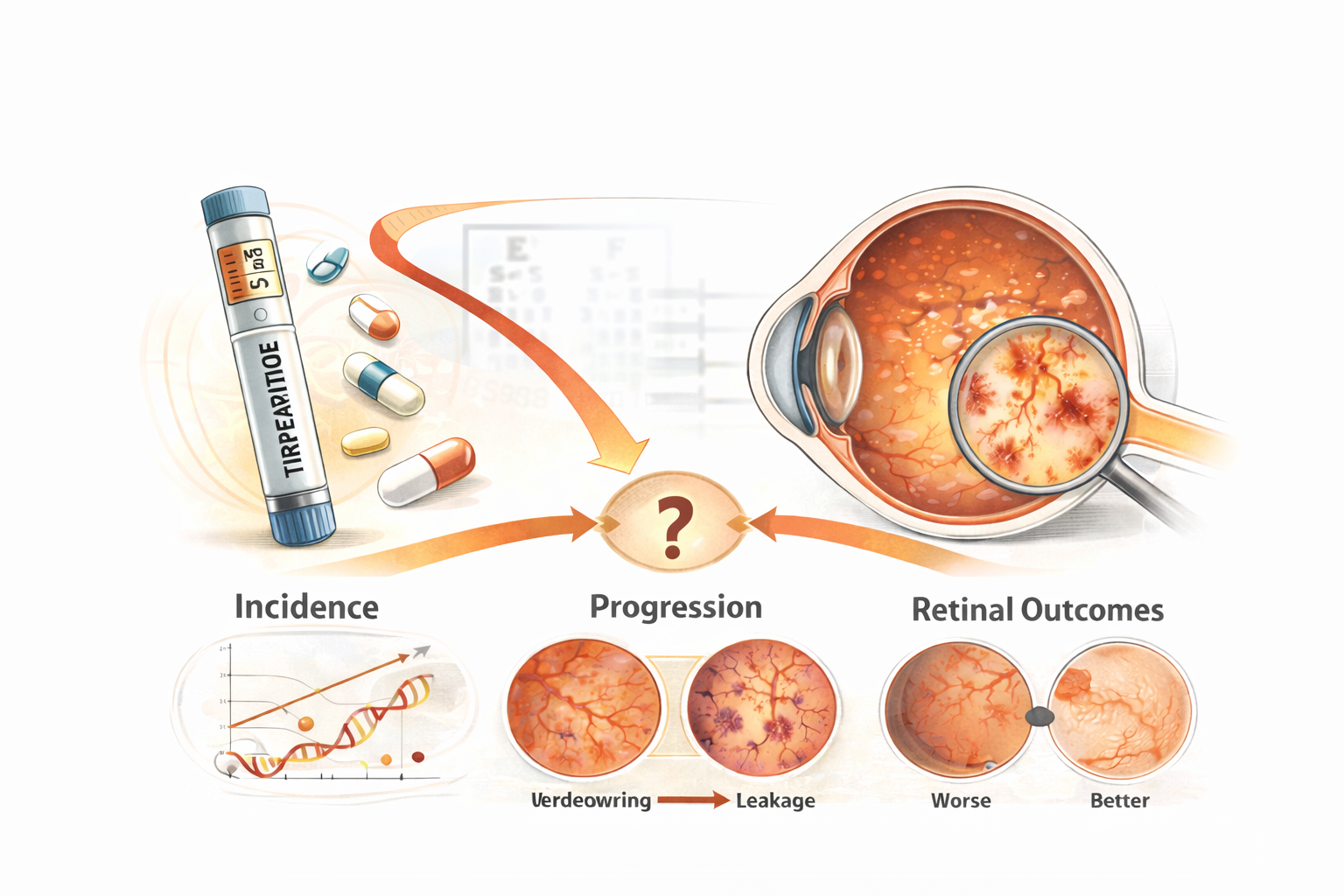
Background: Tirzepatide is a dual glucose-dependent insulinotropic polypeptide (GIP) and glucagon-like peptide-1 (GLP-1) receptor agonist that produces substantial glycaemic improvement in adults with type 2 diabetes (T2D). Because rapid reductions in glycated haemoglobin (HbA1c) have historically been associated with early worsening of diabetic retinopathy (EWDR), concerns have emerged regarding the retinal safety of tirzepatide, particularly in individuals with pre-existing retinopathy. Objective: To systematically review and synthesise all available clinical evidence evaluating the association between tirzepatide exposure and diabetic retinopathy incidence, progression, early worsening, and other retinal or visual outcomes in adults with T2D. Methods: This systematic review was conducted in accordance with PRISMA 2020 guidance and methodological standards from the Cochrane Handbook and the JBI Manual for Evidence Synthesis. Electronic databases, trial registries, and pharmacovigilance sources were searched from inception to 11 October 2025. Eligible studies included randomised trials, observational cohorts, case series, pharmacovigilance analyses, and review/commentary articles reporting retinal or ocular outcomes in adults with T2D exposed to tirzepatide. Risk of bias was assessed using RoB 2, ROBINS-I, and JBI appraisal tools as appropriate. Due to heterogeneity in study designs and outcome definitions, a structured narrative synthesis was undertaken. Results: Eight sources met the inclusion criteria. Randomised trials provided limited information because retinal outcomes were not prespecified and individuals with advanced diabetic retinopathy were often excluded. A large real-world matched cohort study reported higher odds of incident proliferative diabetic retinopathy among tirzepatide-exposed individuals with baseline retinopathy, alongside lower odds of incident retinopathy among those without baseline disease. Smaller non-comparative studies reported few progression events. Pharmacovigilance analyses identified disproportionality signals for diabetic retinopathy and other ocular events, though these findings were hypothesis-generating and limited by spontaneous reporting biases. Conclusions: Current evidence does not support a uniform increase in diabetic retinopathy risk with tirzepatide, but suggests a potential EWDR-compatible signal in patients with pre-existing retinopathy
Downloads
Published
Issue
Section
License
Copyright (c) 2025 Fahad Ali Alsahli, Muharib Mana Muhaylan Alshammari, Reem M. Alqahtani, Nada Naji Maniaullah Aljuaid, Habiba Saleh G. Alenazi, Sulaiman Moshabab S. Alhebshi, Khalid Ali Rofidi, Shahad Faleh Jamaan Alanazi (Author)

This work is licensed under a Creative Commons Attribution-ShareAlike 4.0 International License.


