
Molecular and Metabolic Mechanisms Influencing Long-Term Weight Regulation after Discontinuation of GLP-1 Receptor Agonists in Adults with Obesity in Saudi Arabia
DOI:
https://doi.org/10.4238/7ps2g495Keywords:
GLP-1 receptor agonists, weight maintenance, weight regain, obesity management, metabolic adaptation, hormonal changesAbstract
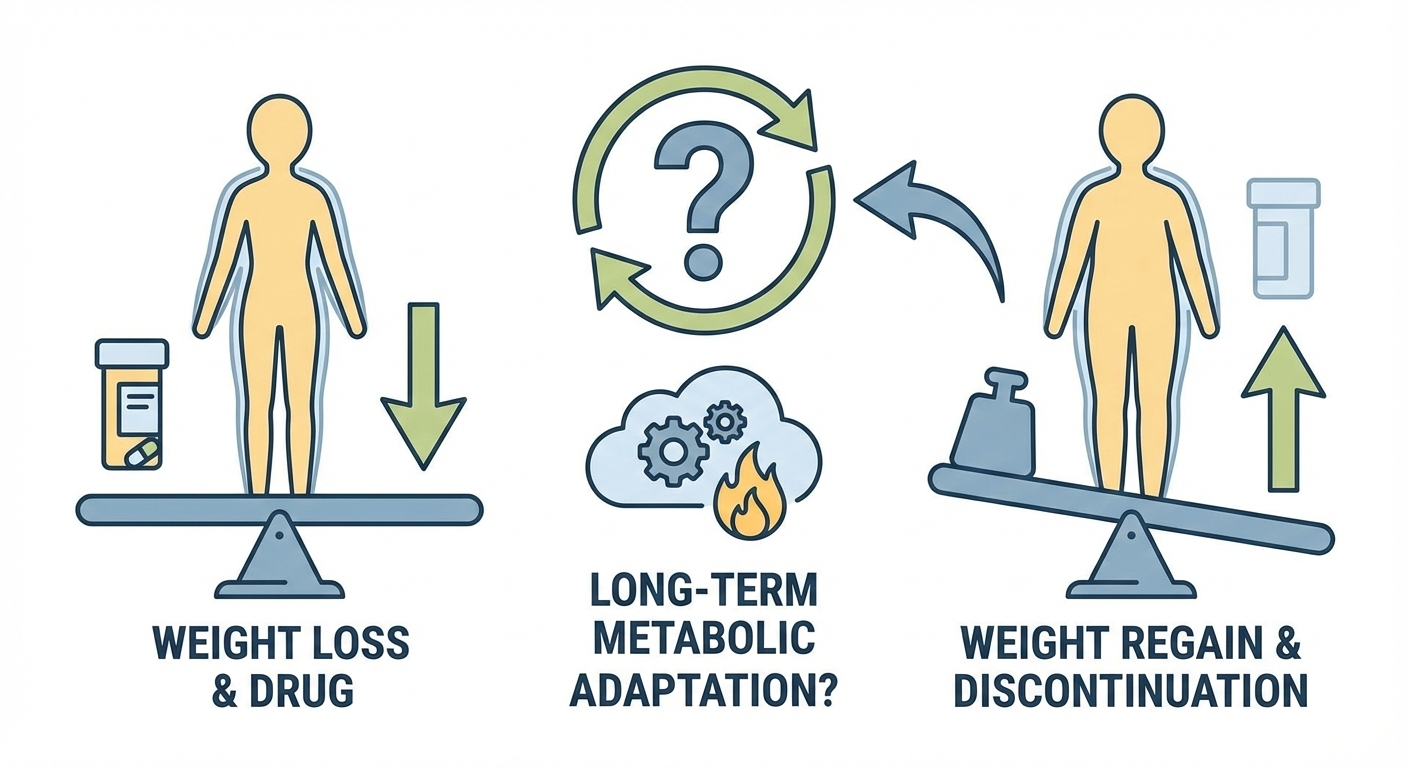
Glucagon-like peptide-1 (GLP-1) receptor agonists have revolutionized obesity management, demonstrating unprecedented weight loss efficacy in clinical trials and real-world settings. However, weight regain following discontinuation represents a significant clinical challenge and a major concern for both patients and healthcare providers. This comprehensive review examines the mechanisms, patterns, and strategies for long-term weight maintenance after discontinuation of GLP-1 receptor agonists in adults with obesity, with specific emphasis on the Saudi Arabian context. A systematic literature search was conducted across multiple databases including PubMed, Scopus, and Google Scholar through January 2026. The review synthesizes evidence on metabolic rebound, hormonal adaptations, behavioral factors, and lifestyle interventions that influence weight maintenance post-discontinuation. Key findings demonstrate that individuals discontinuing GLP-1 receptor agonists experience substantial weight regain, with mean regain of 9.9 kg within the first year for semaglutide and tirzepatide, compared to 2.2 kg for liraglutide, ultimately returning to baseline weight within 1.5-1.7 years. Evidence suggests that weight regain is multifactorial, driven primarily by physiological mechanisms including hormonal adaptations, reduced satiety hormone secretion, increased orexigenic hormone levels, and metabolic adaptation. This review highlights the chronic, relapsing nature of obesity and emphasizes the necessity for continued pharmacological therapy, intensive lifestyle modifications, and behavioral interventions to maintain weight loss achieved during GLP-1 receptor agonist treatment. The review identifies critical research gaps specific to the Saudi Arabian population and provides evidence-based recommendations for clinical practice, healthcare policy, and future research directions.
Downloads
Published
Issue
Section
License
Copyright (c) 2025 Faisal F. Alshehri, Waleed Khalid Aljasser, Mousa Mutlaq Almuhanna, Mohammad Daham Al Rafedi, Waeul Hussain Alsaleh (Author)

This work is licensed under a Creative Commons Attribution-ShareAlike 4.0 International License.


