
Anthropometric indicators and body composition as determinants of healthy ageing in older adults in a rural area of Ecuador
DOI:
https://doi.org/10.4238/0fq84r94Keywords:
Healthy Aging, Body Composition, Anthropometry, Premature Aging, Rural Population, Sarcopenic ObesityAbstract
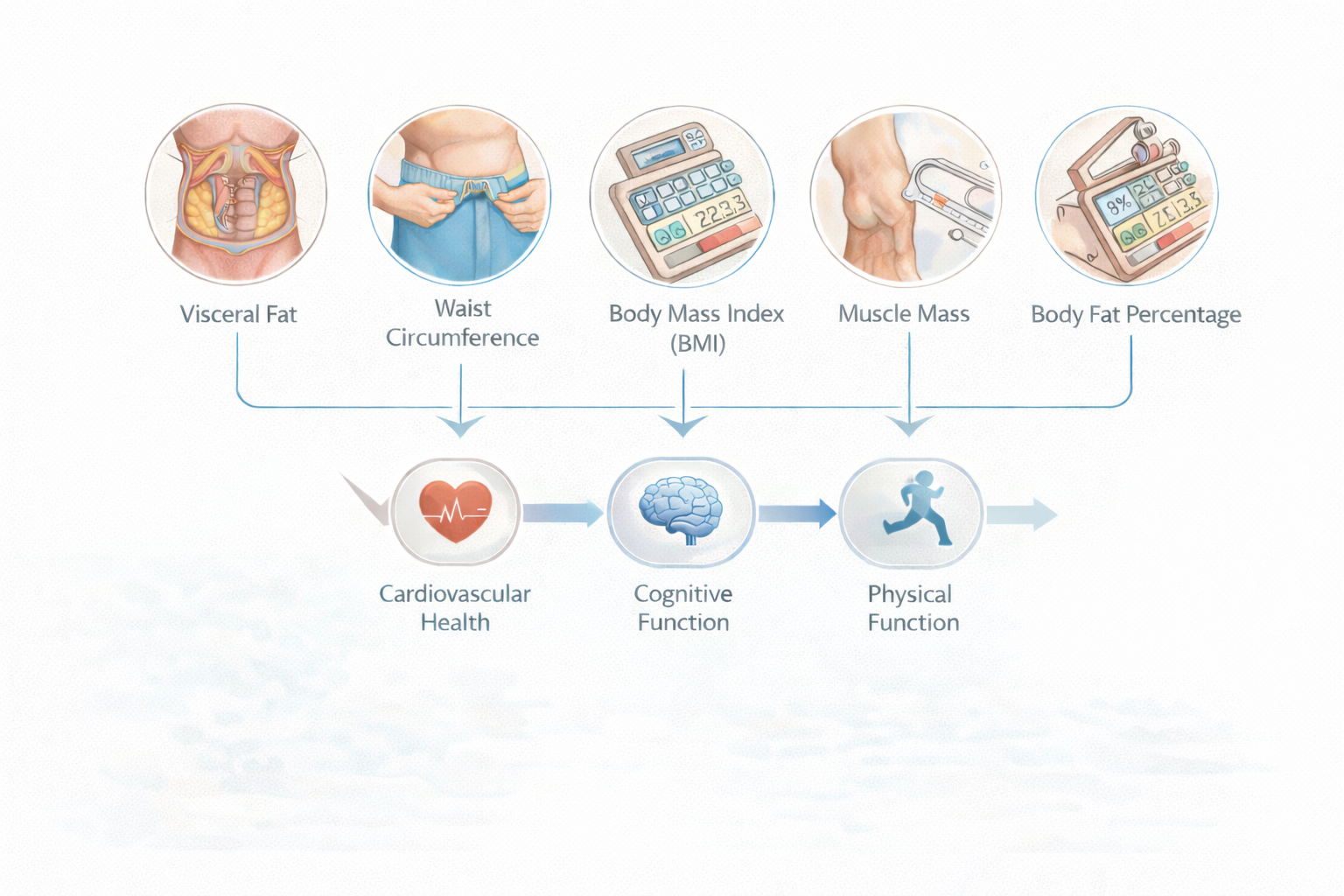
Premature biological aging manifests as physiological deterioration exceeding chronological age, substantially increasing morbidity risk, particularly in rural settings where body composition is a critical determinant of functional health. This research aimed to analyze the association between anthropometric indicators, body composition, and healthy aging in older adults from a rural Ecuadorian parish. A quantitative, correlational, cross-sectional study was conducted with 313 participants. Weight, height, Body Mass Index (BMI), and body compartments (adipose and muscle tissue) were evaluated using medical-grade electrical bioimpedance. Findings revealed a 2.91-year gap between biological age (77.21 years) and chronological age (74.30 years), evidencing accelerated aging. A pattern of sarcopenic obesity predominated (mean BMI: 27.64; body fat: 39.67%; muscle mass: 20.50 kg). Dispersion analysis demonstrated that BMI increases correspond mainly to adipose tissue (R2=0.211) rather than muscle reserve (R2=0.033), indicating critical muscle frailty. It is concluded that BMI alone is insufficient to predict functional health, and the imbalance between adiposity and musculature compromises the physical autonomy of this population.
Downloads
Published
Issue
Section
License
Copyright (c) 2025 Edison Gustavo Moyano Brito, Wilson Andres Lupercio Maza, Aniela Estefania Buele Largo, Isabel Cristina Mesa Cano, Dolores Amparito Rodríguez Sánchez (Author)

This work is licensed under a Creative Commons Attribution-ShareAlike 4.0 International License.


