
Genetic and Molecular Basis of Hypertension: A Review of Pharmacological and Lifestyle Interventions
DOI:
https://doi.org/10.4238/57r6xj10Keywords:
lifestyle modification, combination therapy, blood pressure control, cardiovascular risk reduction, DASH dietAbstract
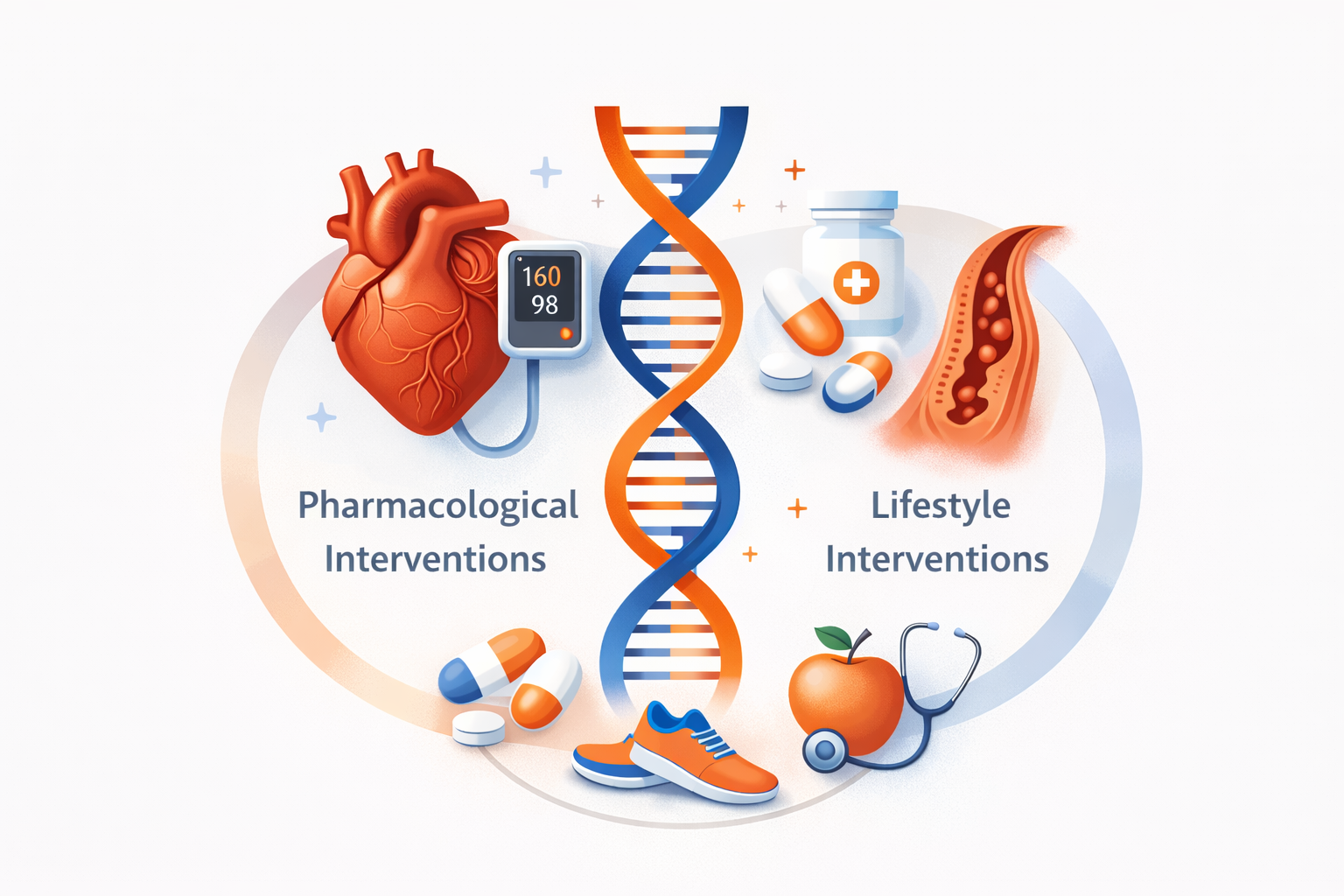
Hypertension remains one of the most prevalent and consequential public health challenges globally, affecting over 1.5 billion people worldwide and contributing to approximately 7.5 million premature deaths annually. The management of elevated blood pressure represents a critical intersection of preventive medicine, pharmacology, and lifestyle modification. This comprehensive review examines both pharmacological and non-pharmacological interventions for hypertension management, with particular emphasis on their implementation in family medicine and pharmacy practice settings. Current international guidelines consistently emphasize that lifestyle modifications should serve as first-line management strategies for both prevention and control of hypertension, particularly in patients with stage 1 disease and low cardiovascular risk. However, a substantial proportion of hypertensive patients require combination pharmacotherapy to achieve adequate blood pressure control. The major antihypertensive drug classes—angiotensin-converting enzyme inhibitors, angiotensin II receptor blockers, calcium channel blockers, and thiazide diuretics—demonstrate comparable efficacy in reducing systolic and diastolic blood pressure by 8–12 mmHg and 5–8 mmHg, respectively, when used as monotherapy. Recent evidence suggests that combination therapy initiated early in treatment offers superior cardiovascular outcomes compared to sequential monotherapy approaches. Additionally, emerging data highlights the importance of culturally tailored lifestyle modification strategies and the potential of digital health technologies in enhancing treatment adherence and remote blood pressure monitoring. This review synthesizes contemporary evidence from randomized controlled trials, systematic reviews, and clinical guidelines to provide a comprehensive framework for the evidence-based management of hypertension in primary care and pharmacy settings.
Downloads
Published
Issue
Section
License
Copyright (c) 2025 Muharib Mana Muhaylan Alshammari, Nagah Mohamed Abouelfetooh Kassem, Atheer Abdullah Ali Alkhulaif, Shroog Hatem Alanazi, Atheer Mohammed Alhawiti, Omar Mohamed Bakr Ali, Waleed Ahmad Taher Alawaji, Abdurhman Aidh A Alalowi (Author)

This work is licensed under a Creative Commons Attribution-ShareAlike 4.0 International License.


