
A Longitudinal Study on the Socio-Psychological Predictors of Smoking Relapse Among Head and Neck Cancer Survivors
DOI:
https://doi.org/10.4238/4n5w2n73Keywords:
Smoking relapse, Psychosocial predictors, Longitudinal study, Behavioral OncologyAbstract
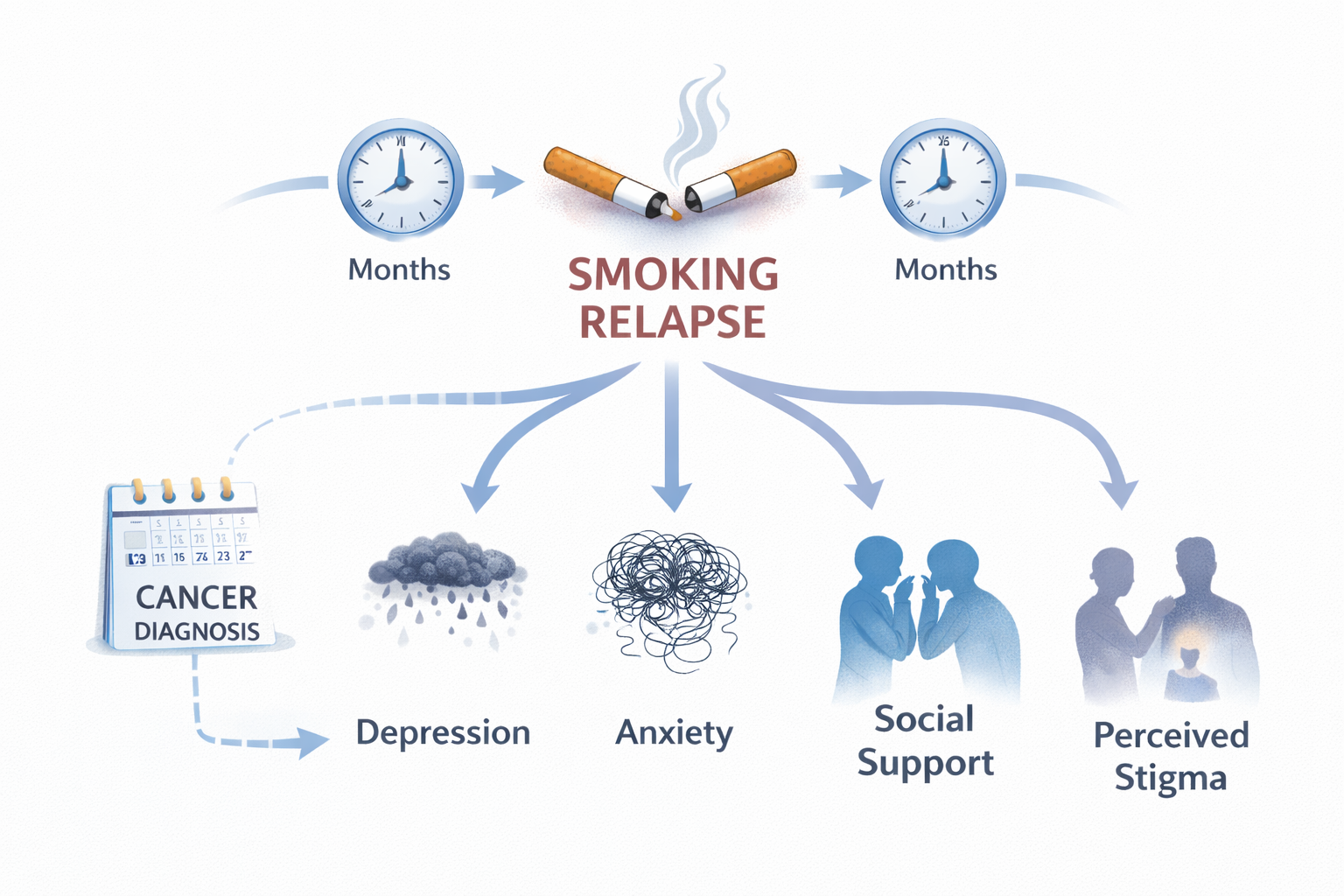
Objectives: This research seeks to understand the longitudinal social-psychological predictors that influence smoking relapse in patients surviving head and neck squamous cell carcinoma (HNSCC). Post-treatment relapse smoking rates remain high despite the association of continued smoking with a poor prognosis. This study attempts to develop a predictive model integrating psychosocial stressors, behavioral factors, and population characteristics to refine prevention strategies. Methods: A cohort of 312 HNSCC survivors was enrolled and followed for 18 months. Participants were interviewed 6, 12, and 18 months after treatment. Comprehensive interviews were conducted at the end of primary therapy, gathering demographic information, smoking history, and psychological evaluation (depression, anxiety, perceived stress), levels of social support, and health behavior scores. The data were analyzed using multivariate logistic regression and Cox proportional hazard modeling to measure time-to-relapse and determine independent predictors. Psychometric instruments utilized PSS, HADS, and MSPSS. Results: Of participants, 36.5 percent had relapsed by the 18-month mark. Accumulated stress (PSS > 20) and lack of social support (MSPSS < 50), paired with depressive symptoms (HADS-D ≥ 8), were associated with greater risk of relapse. Moreover, low socioeconomic status, particularly income and employment, was linked to failure to maintain abstinence (HR = 2.18; 95% CI: 1.40–3.42). Strong provider reinforcement plus counseling post-treatment was associated with significantly lower relapse rates, indicating the impact of psychosocial support. Conclusion: Head and neck cancer survivors are deeply affected by social-psychological factors, especially stress, depression, and insufficient support in relation to smoking relapse. This study underscores the importance of developing comprehensive survivorship care systems that integrate routine psychological evaluations and active, holistic behavioral strategies to lower relapse risk and enhance long-term prognosis.
Downloads
Published
Issue
Section
License
Copyright (c) 2025 Danish Kundra, Dr. Manvi Bhatt, Dr. Sunil Kumar Agrawala, Dr Mayur Dodiya, Priyabati Choudhury, Dr. Vidushi Sheokand (Author)

This work is licensed under a Creative Commons Attribution-ShareAlike 4.0 International License.


