
Health Economic Analysis of Immunotherapy Versus Chemotherapy for Recurrent Metastatic Melanoma in Southeast Asian Populations
DOI:
https://doi.org/10.4238/68000v06Keywords:
Health economics, Metastatic melanoma, Markov model, Oncology politics, Healthcare resource utilizationAbstract
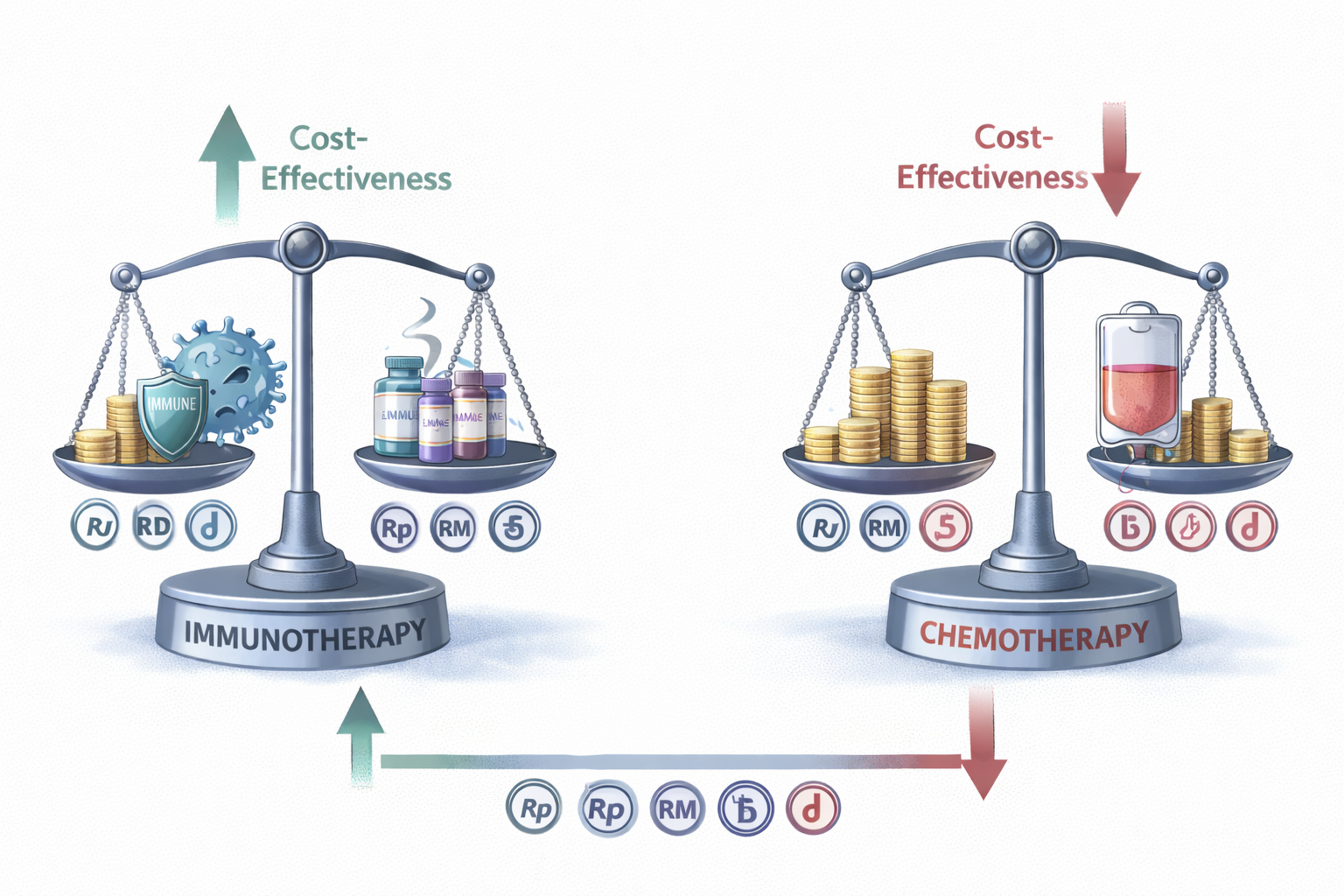
Objectives: This study aims to perform a comprehensive evaluation of the health economy surrounding the treatment of recurrent metastatic melanoma in Southeast Asian populations, comparing the use of immunotherapy and conventional chemotherapy. The primary objective focuses on estimating the cost-effectiveness, QALYs, and healthcare resources used in each treatment during the span of a limited oncology budget, alongside inequitable advanced treatment access within the region. Methods: A Markov decision-analytic simulation model was constructed to project the lifetime costs and health outcomes of patients treated with immune checkpoint inhibitors (anti-PD-1/PD-L1 therapies) as opposed to those receiving platinum-based chemotherapy. Clinical efficacy and toxicity data were sourced from published phase III trials and validated through meta-analyses. Cost inputs, including drug acquisition, administration, adverse event management, and follow-up care, were retrieved from the hospital databases of the studied regions and Malaysia, Thailand, Indonesia, and the Philippines. Health utilities were extracted from the literature and local expert elicitation. ICERs were calculated and probabilistic sensitivity analysis was conducted to adjust for parameter uncertainty. Results: Immunotherapy demonstrated a greater clinical benefit, achieving an average of 1.48 QALYs compared to 0.73 QALYs with chemotherapy. The total cost per patient for immunotherapy was USD 82,400, while it was USD 38,900 for chemotherapy. The ICER equaled USD 57,589 per QALY, which is below the often-accepted willingness to pay thresholds for Singapore and Malaysia, but lower than the upper-middle-income Southeast Asian nations Indonesia and the Philippines. Sensitivity analyses confirmed the robustness of findings across a range of assumptions. Conclusion: Immunotherapy remains superior to chemotherapy for Southeast Asian patients suffering from recurrent metastatic melanoma, in terms of survival and quality of life. However, the cost-effectiveness analysis is deeply influenced by the health financing systems of the concerned countries and GDP-related benchmarks. Governments are suggested to take into account the HTA results, differential and expanded pricing policies, and access frameworks to enhance fairness in the treatment of melanoma within the region.
Downloads
Published
Issue
Section
License
Copyright (c) 2025 Dr. Suman Vij, Abhinav Rathour, Dr. Manvi Bhatt, Dr. Jyoti Prakash Samal, Dr Arpan Shah, Alok Kumar Moharana (Author)

This work is licensed under a Creative Commons Attribution-ShareAlike 4.0 International License.


