
Barriers to Contraceptive Use in Primary Healthcare: Implications for Hormonal Regulation and Reproductive Health Outcomes
DOI:
https://doi.org/10.4238/e8p66g18Keywords:
Contraceptive utilization barriers, Primary healthcare services, Reproductive health decision-making, Sociocultural influences on contraception, Health system constraintsAbstract
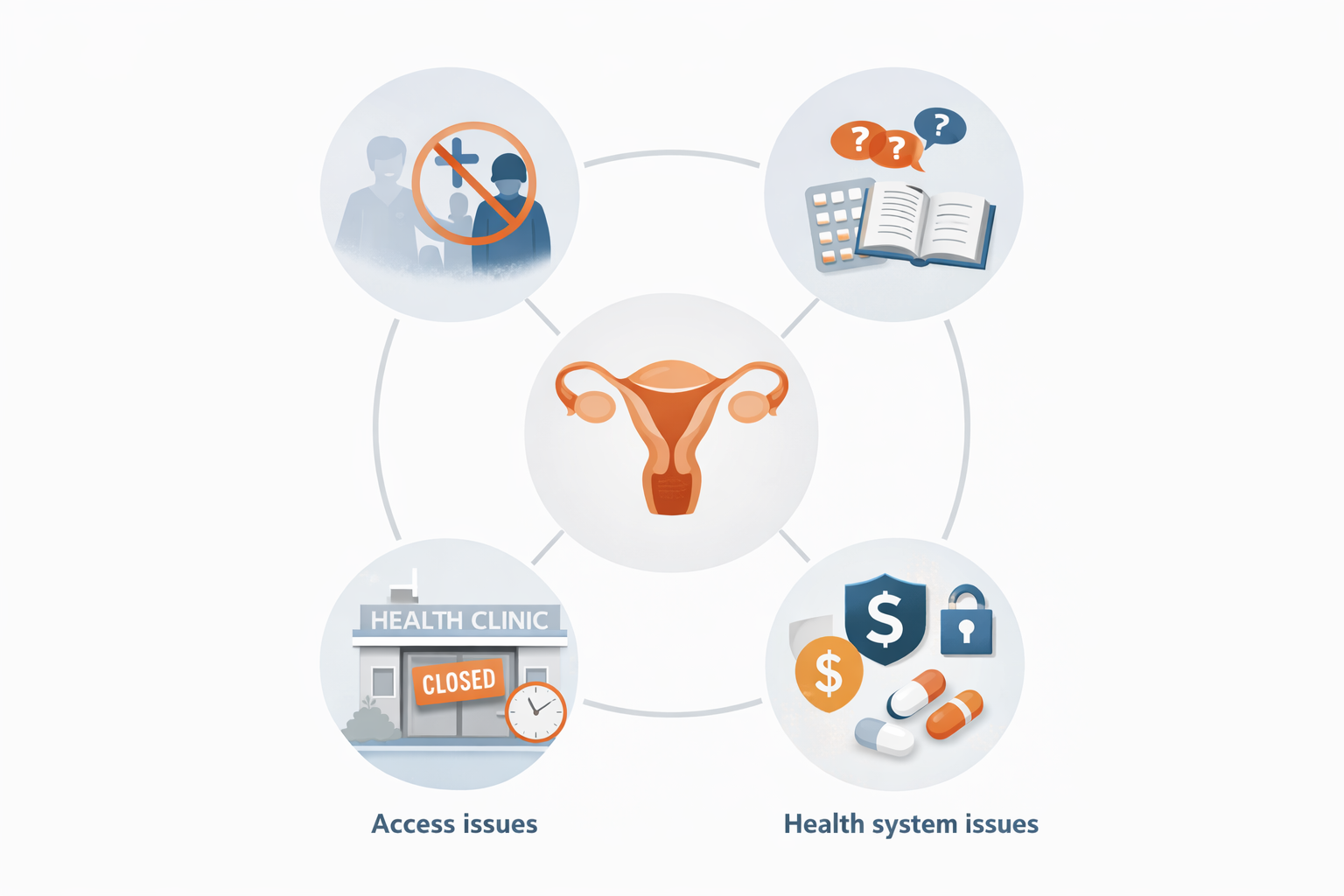
Background: Many people, especially women in low- and middle-income countries, still have major hurdles preventing contraceptive use despite international initiatives to improve access to contemporary contraceptives. Because of multifactorial hurdles, primary healthcare (PHC) sites—which are the frontline for reproductive health services—remain underused. The goal of this systematic analysis was to find and combine the obstacles impeding contraceptive use in primary healthcare (PHC) systems throughout different areas and communities. Methodology: Between January 2000 and April 2025, papers were found via systematic searches across the CINAHL, Scopus, Web of Science, and PubMed databases. If studies investigating obstacles to contraceptive use in PHC contexts among those of reproductive age were included. Both qualitative and quantitative methodologies were taken into account. Personal, social, and health system-level obstacles were found by extracting and thematically evaluating data. The Joanna Briggs Institute and Newcastle-Ottawa Scale instruments were employed to evaluate methodological quality. Results: Nineteen studies, including a range of people aged 14-55 years from Africa, the Middle East, and North America, were incorporated. Thematic analysis revealed important personal-level impediments like widespread myths and beliefs, the terror of side effects, lack of information, and negative attitudes toward birth control. Stigma, partner and family disapproval, gender expectations, and religious opposition all comprise obstacles within society. Health system-related issues included facility physical inaccessibility, lack of privacy, provider prejudice, and bad communication. These connected elements greatly hampered reproductive decision-making autonomy and contraceptive use. Conclusion: In PHC situations, complex interactions of personal beliefs, cultural norms, and institutional health care restrictions restrain contraceptive usage. To increase access to and acceptance of contraception, interventions have to take a multi-level approach addressing misinformation, actively involve communities, educate providers, and modify PHC distribution system. To get over constant obstacles, policies should give first priority to youth-friendly, inclusive, and culturally sensitive approaches.
Downloads
Published
Issue
Section
License
Copyright (c) 2025 Shaden Khalid Bahatheq, Abdullah Omar Awadh Alzahrani, Saja Ahmed Naser Ameri, Nada Ali Ahmed Alshahrani, Nawaf Sami Althobaiti, Rana Alshehri, Saeed Fahad Saeed Alshahrani, Rashed Talal Rashed Alrashed, Salha Ali Ahmad Alzubaidi (Author)

This work is licensed under a Creative Commons Attribution-ShareAlike 4.0 International License.


