
Radiation-Associated Endothelial Injury in Children: Molecular Pathophysiology and Non-Invasive Doppler Assessment
DOI:
https://doi.org/10.4238/5n5zmv78Keywords:
pediatric radiotherapy, molecular pathophysiology, radiation-induced vasculopathy, cerebrovascular disease, endothelial injuryAbstract
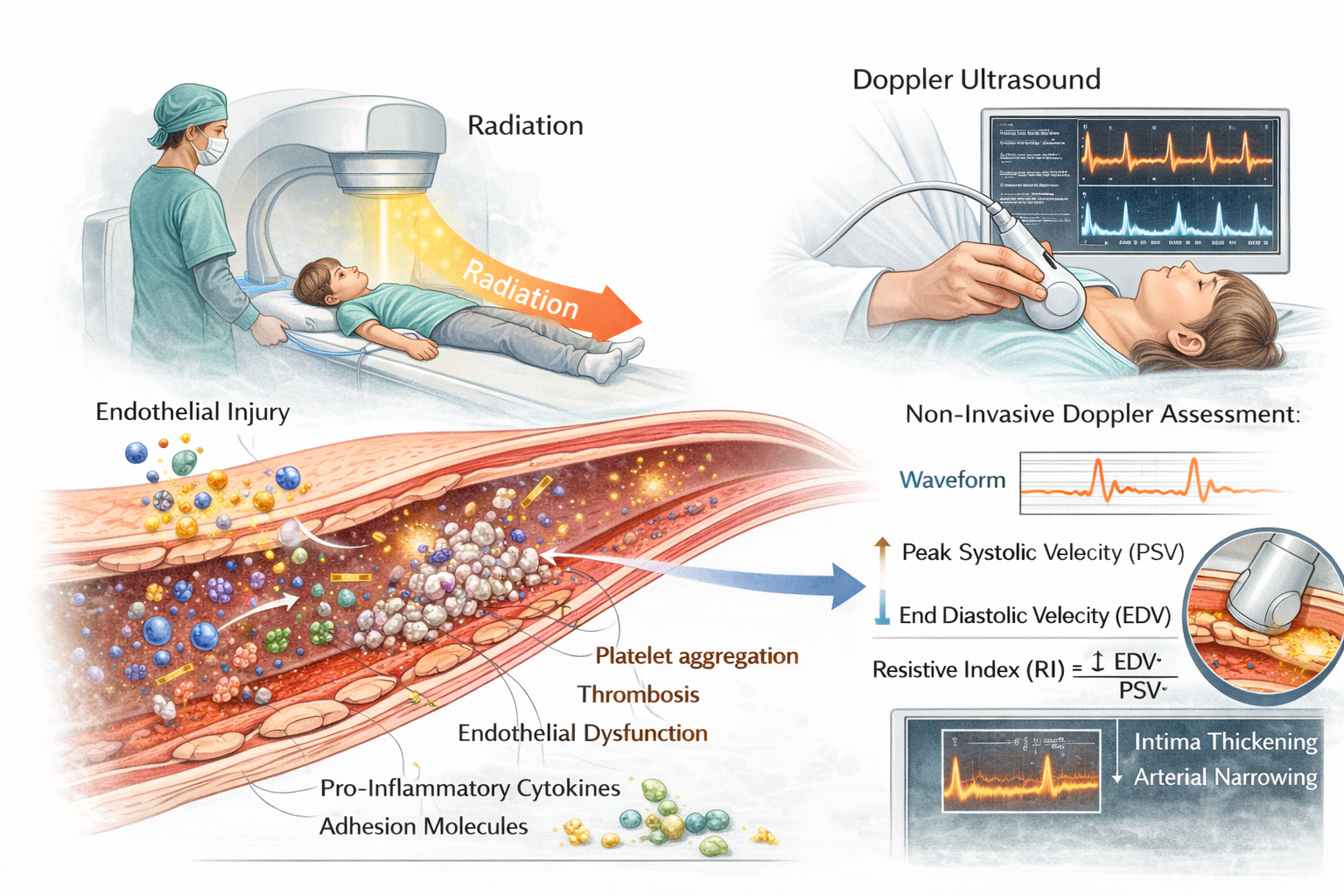
Objective: To describe the current and potential role of Doppler ultrasound, including transcranial and carotid Doppler, in the early detection of radiotherapy-induced vascular abnormalities in pediatric cancer patients. Methods: A systematized narrative review of the literature in international biomedical databases (PubMed, Scopus, Web of Science) on pediatric radiotherapy, vascular toxicity, and Doppler ultrasound was conducted, with emphasis on publications from the last five years (2020–2025). Reviews, clinical guidelines, and observational studies focused on childhood cancer survivors treated with cranial or neck radiation therapy, and research evaluating the use of Doppler ultrasound for vascular follow-up were prioritized. Results: Recent evidence shows that pediatric survivors exposed to radiation therapy to the brain, neck, or upper chest have a significantly increased risk of cerebrovascular events and late vasculopathy, dependent on dose and the irradiated region (especially Willis polygon and carotid arteries). Guidelines and cohort studies suggest that carotid and transcranial Doppler ultrasound can non-invasively identify subclinical changes such as increased intima-media thickness, hemodynamically significant stenosis, and altered flow velocities, before the onset of major clinical events. Doppler is emerging as a complementary tool to MRI and CT angiography, with advantages in terms of absence of radiation, repeatability and low cost in long-term surveillance programs. Conclusions: Doppler ultrasound represents an accessible and safe imaging modality with high potential for the early diagnosis of radiation-induced vasculopathies in pediatric radiotherapy. The integration of Doppler screening protocols, stratified according to dose and irradiation field, could optimize survivor follow-up, reduce cerebrovascular morbidity, and support radiation protection decisions and therapeutic planning.
Downloads
Published
Issue
Section
License
Copyright (c) 2025 María Auxiliadora Calero-Zea, Roxana Rivera Valencia, Denisse Puentes Águila, Maite Raquel Figueroa Montilla (Author)

This work is licensed under a Creative Commons Attribution-ShareAlike 4.0 International License.


