
Comparative Analysis of Biochemical and Metabolic Profiles in Dairy Cows Managed under Grazing and Supplemented Grazing Systems in a Tropical Climate
DOI:
https://doi.org/10.4238/59zvkv17Keywords:
Metabolic balance, blood biomarkers, nutritional management, protein-energy metabolism, tropical dairy systemsAbstract
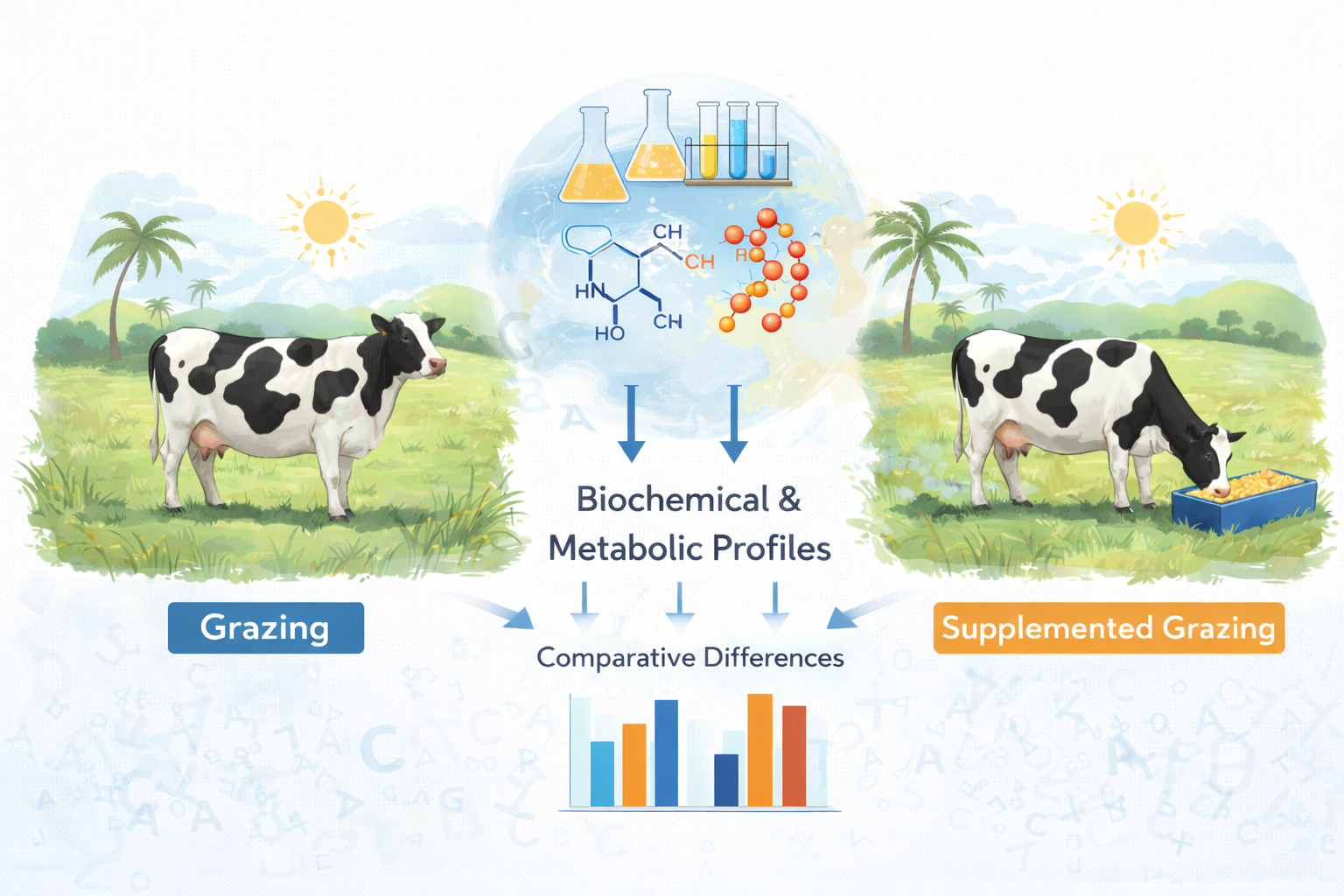
Background: The main goal of this study was to examine the biochemical profiles of dairy cows that were fed two different diets: one was a diet of grass only, and the other was a diet of grass and corn stingray supplementation. Methods: This study was conducted in tropical conditions to understand how these diets affected cholesterol, urea, glucose, creatinine, albumin, and plasma protein levels. The research was done on two farms in Manabí province. The study included 44 lactating cows (22 per farm). The research was descriptive and not experimental. Venipuncture blood samples were collected and analyzed by UV-visible spectrophotometry, processing the data with descriptive statistics and tests such as ANOVA, Student's t, and Kruskal-Wallis. Results: The results showed that cholesterol levels stayed within a healthy range (80–150 mg/dl), with a slight increase in supplemented cows during the second third of lactation (166.42 mg/dl). Urea levels were much lower in animals that ate maize stingrays (1.20–1.35 mg/dl) than in animals that grazed exclusively (6.71–7.07 mg/dl). Glucose levels in the system reflected low blood sugar (hypoglycemia) with supplementation (17.65–43.99 mg/dl) and adequate levels in grazing (69.75–92.30 mg/dl). Creatinine levels stayed high in both systems (1.20–1.93 mg/dL), while albumin and plasma proteins remained within the normal range. Conclusion: To sum it up, the type of diet had a direct impact on metabolism. Grazing exclusively was better for energy and protein balance than supplementation with corn stingray
Downloads
Published
Issue
Section
License
Copyright (c) 2025 Yadira Marcillo Alcívar, Ernesto Antonio Hurtado, Tommy Cueva Navia (Author)

This work is licensed under a Creative Commons Attribution-ShareAlike 4.0 International License.


