
Digital and AI-Driven Diagnostic Technologies in Oral Health: A Systematic Review with Implications for Precision and Translational Dentistry
DOI:
https://doi.org/10.4238/2yd0q683Keywords:
Digital dentistry, Computational diagnostics, Precision oral health, Dental imaging analytics, Data-driven healthcareAbstract
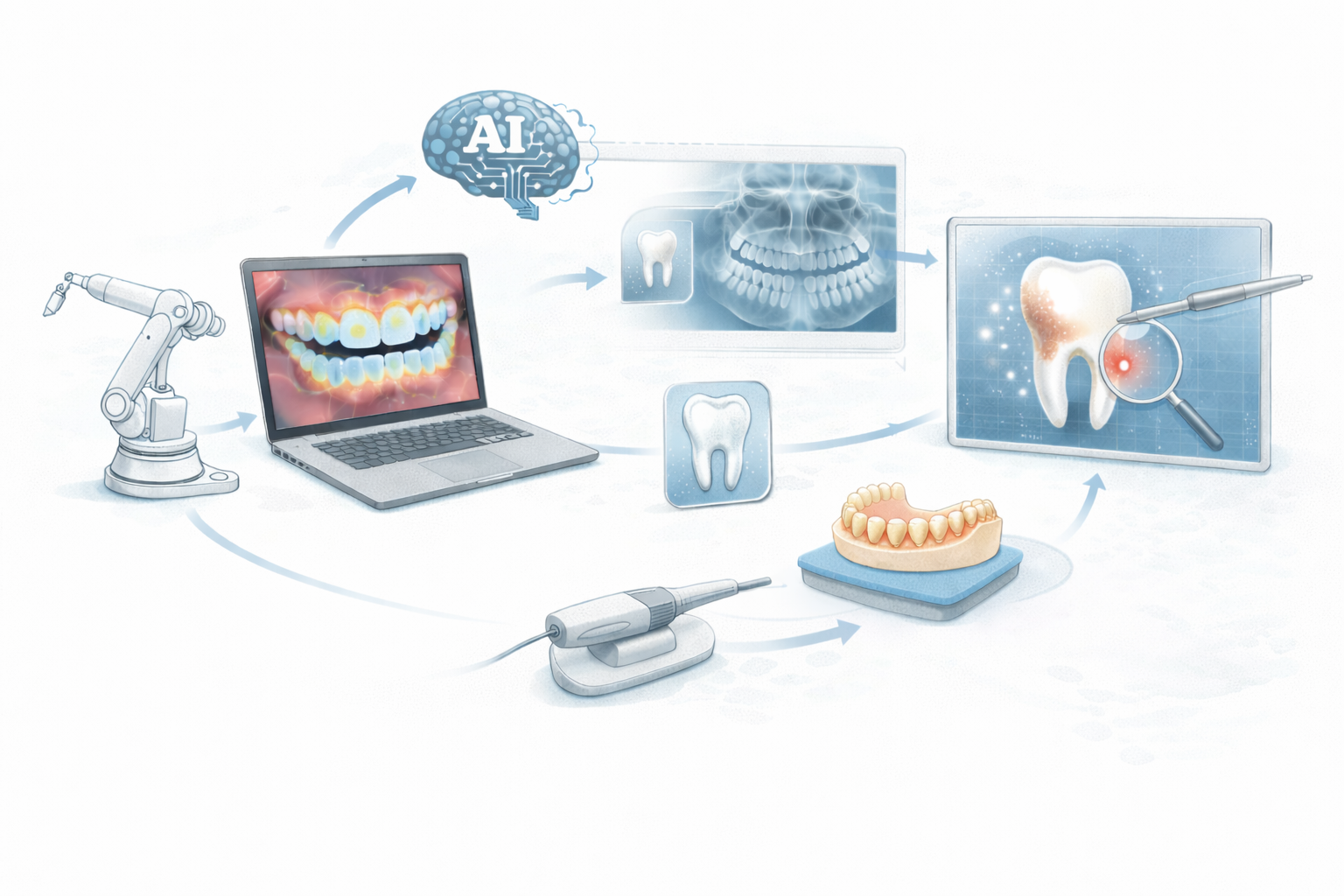
The introduction of digital technologies in the field of dentistry has transformed the diagnostic, treatment programming, restorative, and preventive elements of dental care. The systematic review is a compilation of the recent evidence on the effects of digital dentistry on patient outcomes, clinical efficiency, patient experience, and accessibility of oral health. The peer-reviewed articles published between January 2019 and March 2026 were searched in PubMed and Scopus, IEEE Xplore, Cochrane Library, and Google Scholar. The PRISMA guidelines were followed; 48 studies that satisfied the strict inclusion criteria, such as randomized controlled trials (RCTs), cohort studies, systematic reviews, and meta-analyses, were analyzed. The results prove that such digital modalities as intraoral scanning (IOS), computer-aided design/computer-aided manufacturing (CAD/CAM), cone-beam computed tomography (CBCT), artificial intelligence (AI) to perform diagnostics, and teledentistry contribute greatly to the accuracy of the diagnosis, the accuracy of the restorations and prostheses, the predictability of the implant placement, and the efficiency of the working process. Such patient-reported outcomes as satisfaction, comfort, and acceptance of treatment are significantly greater with digital compared to conventional methods. Moreover, digital dentistry is promising to enhance care access by way of tele-dentistry and simplify the process of carrying out public health interventions. Nevertheless, there are still challenges such as high initial costs, the special training that will be required, data security issues, and the danger of increasing the existing digital disparities. This review concludes that digital dentistry is a radical change to a more accurate, effective, and patient-oriented oral healthcare. To ensure that all the potential is achieved, it is essential to invest in training, infrastructure, and equal access, as well as to continue researching the long-term clinical outcomes and cost-efficiency.
Downloads
Published
Issue
Section
License
Copyright (c) 2025 Walid Badr, Bashayr Hassan Alshehri , Ghaida Manaf Abuljadayel , Haya Essam Rashedi , Marwah Julidan (Author)

This work is licensed under a Creative Commons Attribution-ShareAlike 4.0 International License.


