
The impact of Taq1A ANKK1/DRD2 Polymorphism on Dopamine in Individuals with Amphetamine Use Disorder in Basra, Iraq
DOI:
https://doi.org/10.4238/c4y77n43Abstract
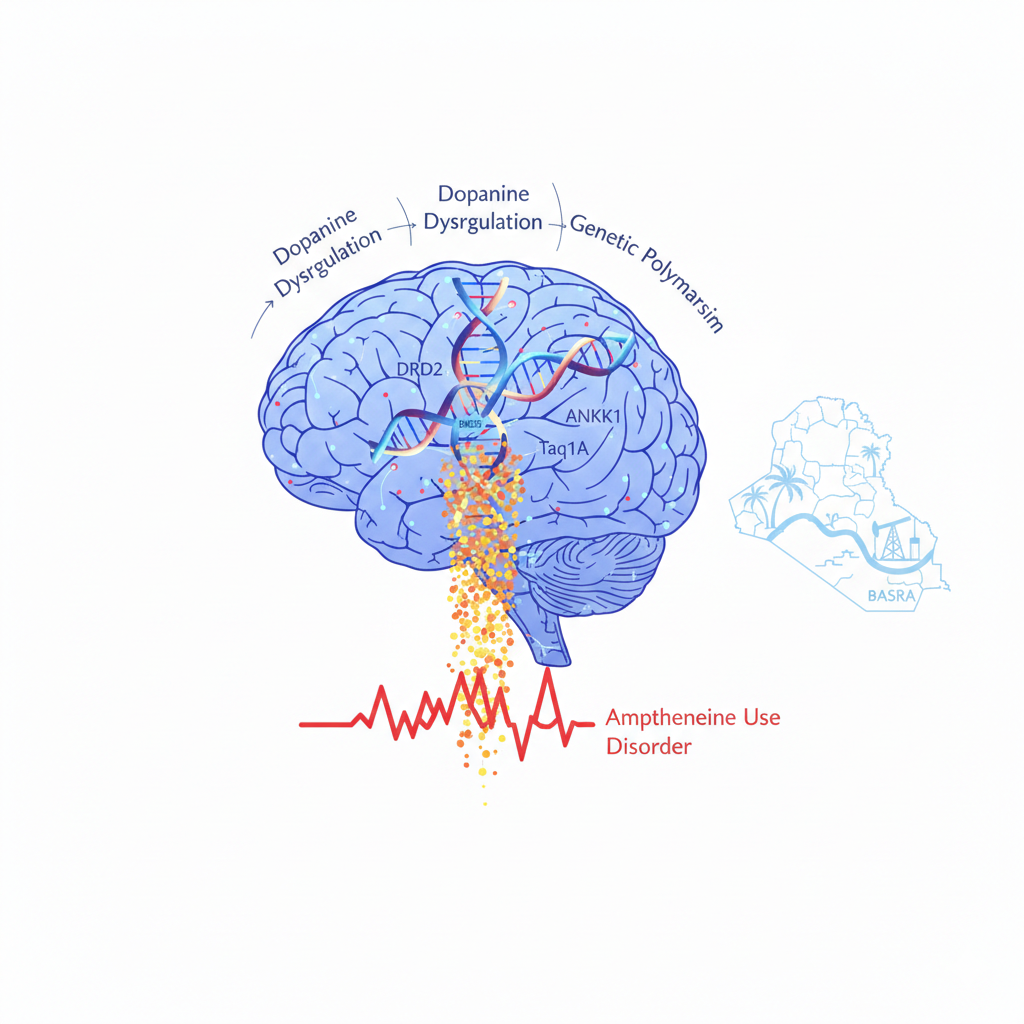
The current study analyzed addictive behavior at the molecular level among amphetamine (AMP) addicts residing in the Basrah Addiction Treatment Center, during the period extending from October 2024 to July 2025. DNA was extracted from blood samples of two groups, control (20) and AMP addicts (80). Their ages ranged between 14 and 45 years and older. The DNA was then amplified using PCR. The results showed that the highest percentage of AMP addicts was 12.5% in September 2024, while the lowest percentage was 5.5% in January and February 2025, compared to the rest of the months. The results also indicated that the highest percentage of addiction was among uneducated addicts (85.5%), while the AMP addiction was 13.5% in educated addicts. The 25–34-year age group had the highest percentage (31.83%), while the age group > 45 years recorded the lowest percentage (18.8%) of AMP use. The age groups 14-24 and 35-44 years recorded percentages of 26.32% and 23.1%, respectively. Based on the PCR analysis of the TaqIA polymorphism, two mutations were identified compared to the control group (CC). These were homozygous (TT, 2.5%) and heterozygous (CT, 27.5%). In AMP addicts, the T-allele frequency was higher (83.75%) than the C-allele frequency (16.25%). The results also reported that the dopamine receptor concentrations in AMP addicts were significantly higher in the CT genotype than in the CC and TT genotypes. These results suggest the role of genetic factors in addiction susceptibility and their interaction with neurotransmitters such as dopamine.
Downloads
Published
Issue
Section
License
Copyright (c) 2025 Hayder F. Al-Nassir, Adnan B. Al-Hawash , Sarmad Awad Mozan AL-Asadi (Author)

This work is licensed under a Creative Commons Attribution-ShareAlike 4.0 International License.


