
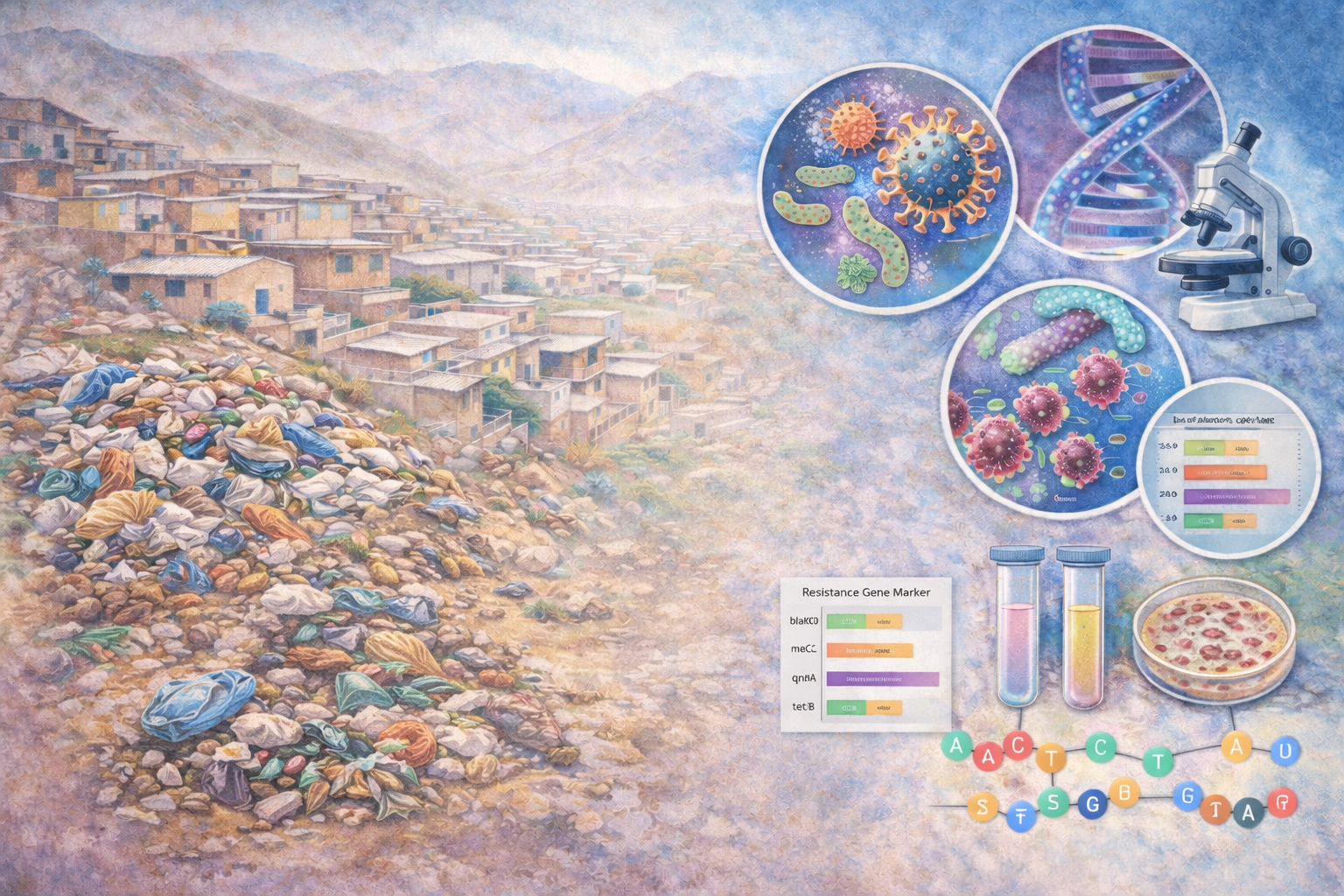
Environmental Education, Waste Exposure, and Potential Microbial or Genetic Health Risk Indicators in a Peri-Urban Peruvian Community
DOI:
https://doi.org/10.4238/3ehhck20Keywords:
environmental education, sustainable practices, solid waste, sustainability, SDG 12Abstract
The study analyzed the relationship between environmental education and sustainable practices in solid waste management in the community of Quebrada Verde, district of Pachacámac, during the year 2025. Using a quantitative, applied, and non-experimental design, 120 residents participated in a structured survey of 24 items validated by experts (V de Aiken = 0.91; α = 0.89). The data processed using SPSS version 25 software and Spearman's test (p < 0.05) showed a positive and significant correlation (r = 0.726) between both variables. The results reveal that strengthening environmental knowledge, attitudes, and practices has a direct impact on the adoption of sustainable behaviors aimed at responsible waste management. It is understood that environmental education is a fundamental basis for promoting sustainability in the area and compliance with SDG 12 on responsible production and consumption.
Downloads
Published
Issue
Section
License
Copyright (c) 2025 Inmaculada Soledad Pamela Martinez Casanova, Eliot Jurado Quispe, Ana Maria del Pilar Martinez Casanova, José Eduardo Ayala-Tandazo , Jorge Luis Quiroz Vargas, Miguel Angel Alania-Vasquez , Doris Abigail Rodríguez Bermejo (Author)

This work is licensed under a Creative Commons Attribution-ShareAlike 4.0 International License.


